- HOME
- ABOUT US
- SERVICES
- CUSTOMER STORIES
- OUR EXPERTS
- CONTACT US
- EXPERT TIPS


Making a difference in our clients’ lives
We positively impact the lives of our clients beyond their KPI reports.

Blog Layout
How Does AI-Driven Customer Journey Mapping Transform Digital Strategy?

Dave Gustafson
Digital Marketing Consultant
March 31, 2026
Businesses today collect mountains of customer data but struggle to turn it into actionable insights. AI-driven customer journey mapping changes this by automatically analyzing how customers interact with your brand across every digital touchpoint, revealing patterns and opportunities that manual analysis simply cannot catch. This technology transforms raw behavioral data into clear roadmaps for improving conversions, personalizing experiences, and maximizing marketing ROI.
For companies looking to stay competitive in 2026, understanding and optimizing the customer journey isn't optional anymore. AI makes it possible to see exactly where prospects engage, hesitate, or drop off, then automatically adjust your strategy in real time. The result is smarter marketing decisions, higher conversion rates, and customers who feel understood at every stage of their buying process.
What Is AI-Driven Customer Journey Mapping?
AI-driven customer journey mapping uses artificial intelligence to analyze how people interact with your business across websites, social media, email, paid ads, and even offline channels. Instead of relying on assumptions or small data samples, AI processes millions of behavioral signals to create comprehensive maps showing exactly how customers move from awareness to purchase and beyond.
These intelligent systems identify patterns in customer behavior that humans would miss. They track micro-moments when someone considers a purchase, spots friction points causing cart abandonment, and recognizes which touchpoints drive the most engagement. Machine learning algorithms continuously improve these maps by learning from new data, making your understanding of customer behavior more accurate over time.
The technology connects fragmented data sources into unified customer profiles. When someone visits your website, clicks an email, engages on social media, then calls your sales team, AI links these actions to one person and shows how each interaction influenced their decision. This complete view reveals the true complexity of modern customer journeys, which rarely follow the simple linear paths marketers once assumed.
Why Traditional Journey Mapping Falls Short in Modern Digital Marketing
Manual customer journey mapping cannot keep pace with how fast digital behavior changes. Marketing teams spend weeks creating journey maps based on surveys and interviews, but by the time they finish, customer preferences have already shifted. Traditional methods capture snapshots of behavior rather than the dynamic, constantly evolving reality of how people actually make decisions online.
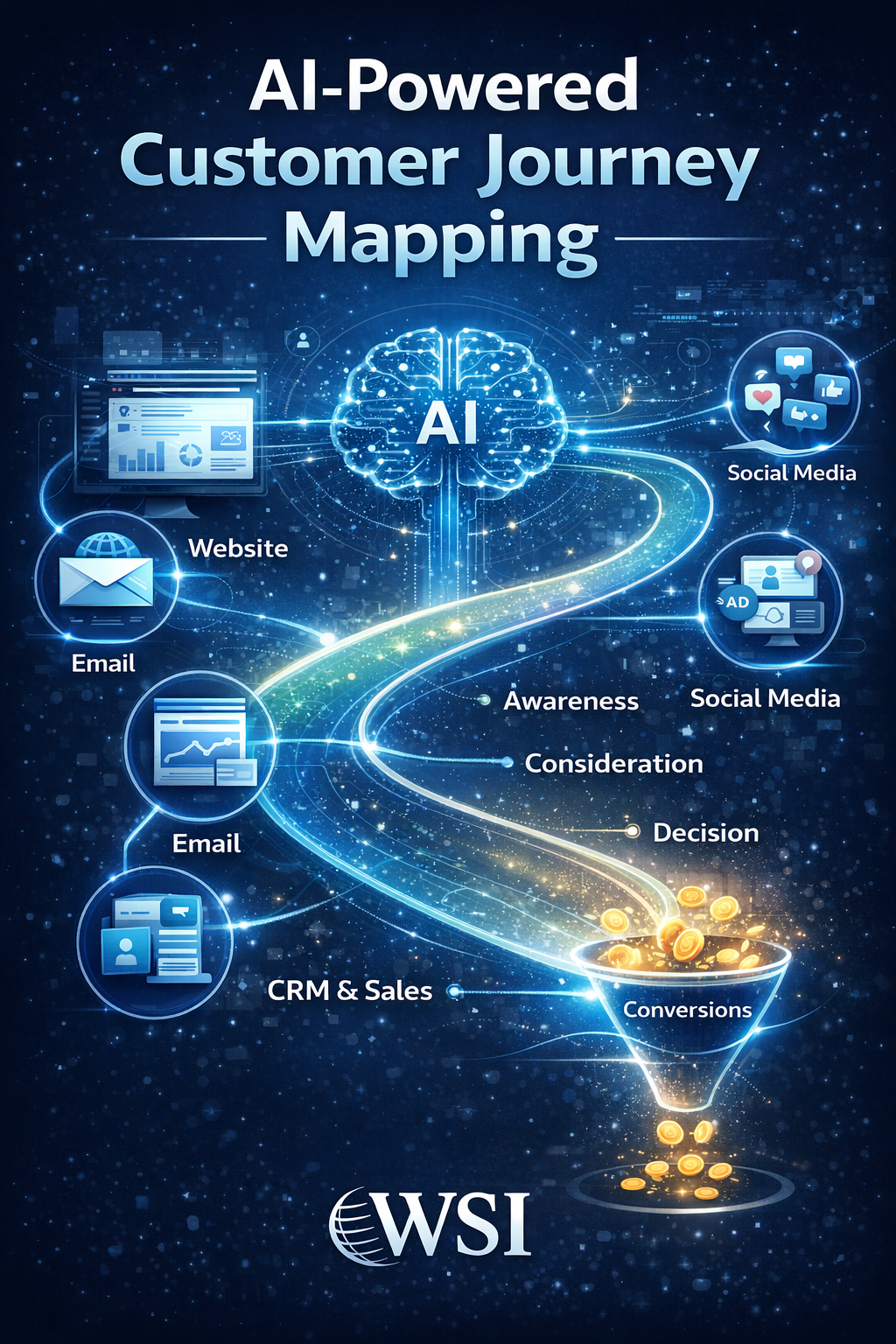
Large datasets overwhelm manual analysis. A typical business generates thousands of customer interactions daily across multiple channels. Human analysts can only examine small samples, missing critical patterns that emerge only when looking at the complete picture. Important micro-moments where customers make split-second decisions about whether to engage or leave go completely unnoticed.
Real-time adaptability is impossible with traditional approaches. Static journey maps created months ago cannot respond to sudden market changes, new competitor actions, or seasonal behavior shifts. Marketers make decisions based on outdated information, launching campaigns optimized for customer behavior that no longer exists. This delay between insight and action costs businesses both money and competitive advantage.
How AI Analyzes Customer Behavior Across Multiple Touchpoints
Data Collection and Integration
AI systems automatically gather behavioral data from every channel where customers interact with your brand. Website analytics reveal page visits, time spent, and navigation patterns. Social media monitoring tracks mentions, shares, and engagement. Email platforms provide open rates, click patterns, and response timing. Paid advertising systems share impression data, click-through rates, and conversion paths.
The real power comes from integration. AI connects these separate data streams into unified customer profiles that show complete journey histories. When someone interacts with your brand multiple times across different platforms, the system recognizes this is the same person and builds a continuous narrative of their experience. This eliminates the data silos that traditionally prevented marketers from understanding cross-channel behavior.
Advanced systems also incorporate offline interactions. Point-of-sale data, phone call records, in-person event attendance, and customer service interactions all feed into the comprehensive journey map. AI matches online and offline identities using email addresses, phone numbers, loyalty program IDs, and probabilistic matching techniques. The result is a truly omnichannel view of how customers engage with your business.
Pattern Recognition and Predictive Analytics
Machine learning algorithms excel at spotting behavioral patterns that predict future actions. They analyze thousands of successful customer journeys to identify common characteristics, then flag when current prospects show similar signals. This allows marketers to intervene at optimal moments with personalized messages that guide people toward conversion.
Predictive analytics forecast customer needs before they are explicitly expressed. If AI notices that customers who view certain product pages typically search for specific information within 48 hours, it can proactively provide that content. When behavioral patterns indicate someone is likely to abandon their cart, automated retention campaigns trigger immediately with targeted offers or reassurance.
These systems continuously learn and improve. As they process more journeys and see which predictions prove accurate, the algorithms refine their models. Pattern recognition becomes more sophisticated over time, catching subtle behavioral nuances that earlier versions missed. This self-improving capability means your customer understanding gets sharper the longer you use AI journey mapping.
Key Benefits of AI-Powered Journey Mapping for Business Growth
Enhanced Lead Generation and Conversion Rates
AI identifies exactly where prospects drop out of your funnel and why. It spots friction points like confusing navigation, missing information, or poorly timed calls-to-action that cause people to leave before converting. These insights allow you to remove obstacles systematically, creating smoother paths from initial interest to qualified lead status. Businesses using AI journey mapping typically see conversion rate improvements of 15-30% within the first six months.
Personalization at individual journey stages dramatically increases engagement. AI determines which content, offers, and messages resonate with people based on their current position in the buying process. Someone just discovering your brand needs different information than someone comparing your solution to competitors. Automated systems deliver the right message at precisely the right moment, making each interaction feel relevant and timely. For comprehensive approaches to generating high-quality prospects, explore lead generation strategies that work alongside AI insights.
Improved Marketing Automation Efficiency
Contextually relevant automated campaigns replace generic mass messaging. AI triggers workflows based on specific behavioral signals rather than simple time delays or demographic filters. When someone shows research behavior indicating they are comparing solutions, automation sends competitive differentiation content. When engagement patterns suggest decision-making readiness, sales outreach gets prioritized automatically.
Marketing resources get allocated more effectively. Instead of running campaigns for entire segments, AI identifies which individuals need which interventions. This precision targeting reduces wasted spend on people unlikely to respond while increasing investment in high-probability opportunities. Automation efficiency improves by 40-60% when guided by AI journey insights rather than traditional segment-based rules. Learn more about marketing automation solutions that integrate with journey mapping technology.
Data-Driven Content Strategy Optimization
Journey insights reveal exactly what information customers need at each stage. AI identifies content gaps where prospects search for answers you have not provided, highlighting opportunities to create material that addresses real questions. It shows which content formats work best for different journey phases, whether that is videos for awareness, detailed guides for consideration, or case studies for decision-making.
Topic selection becomes strategic rather than guesswork. Instead of creating content based on assumptions about what customers care about, you develop material that addresses documented needs revealed through behavior analysis. Distribution timing optimizes based on when people are most receptive to specific messages. AI determines the ideal moment to share educational content versus promotional offers, maximizing engagement and conversion impact. Discover how content marketing services benefit from AI-powered journey intelligence.
Implementing AI Journey Mapping in Your Digital Marketing Strategy
Essential Tools and Technologies
Successful AI journey mapping requires integrating several technology categories. Customer data platforms collect and unify information from multiple sources into single customer records. Analytics systems process behavioral data to identify patterns and generate insights. Machine learning platforms apply predictive algorithms that forecast future actions and recommend optimizations.
CRM integration ensures journey insights inform sales processes and customer relationship management. When marketing AI identifies high-intent prospects, this information flows directly to sales teams who can prioritize outreach. Data visualization tools translate complex journey analytics into clear, actionable dashboards that marketing teams can understand and use without technical expertise.
Implementation typically starts with connecting existing systems rather than replacing everything. Most businesses already have analytics, email platforms, and CRM systems that can feed data into AI journey mapping tools. The key is selecting solutions with robust APIs and pre-built integrations that minimize technical complexity and accelerate time-to-value.
Building Accurate Buyer Personas with AI Insights
AI-generated journey data validates or challenges existing persona assumptions. Traditional personas rely on interviews and surveys that capture what people say they do, which often differs from actual behavior. Journey mapping reveals how different customer types really interact with your brand, showing the true paths people take rather than idealized versions.
Unexpected segments emerge from behavior clustering. AI groups customers based on similar journey patterns, sometimes revealing audience segments that marketers had not considered. These data-driven personas reflect actual behavior rather than demographic assumptions, leading to more effective targeting and messaging strategies. For expert guidance on creating personas that drive results, explore buyer persona development services.
Persona refinement becomes continuous rather than annual. As AI processes new journey data, it updates persona characteristics to reflect changing behavior. This dynamic approach keeps your customer understanding current, adapting to market shifts much faster than traditional persona development processes that require months of research.
Integration with Existing Marketing Channels
Journey insights inform adaptive search engine optimization by revealing which keywords and topics matter at different journey stages. AI identifies search patterns that lead to conversions versus those that represent early research, helping you prioritize SEO efforts on terms that drive business results. Content gets optimized for the specific questions people ask as they move through their decision process.
Inbound marketing strategies improve dramatically when guided by journey mapping. AI shows exactly where content gaps exist and which topics attract your best prospects. It reveals optimal timing for different content types, ensuring you publish material when your audience is most receptive. Lead nurturing sequences get structured around actual journey progression patterns rather than arbitrary time intervals.
Social media marketing becomes more strategic as journey data shows which platforms influence decisions at different stages. AI tracks how social touchpoints contribute to conversions, helping you allocate resources to channels that truly impact business outcomes. Email marketing campaigns trigger based on journey stage and behavioral signals, delivering messages that align with where each person is in their decision process.
Real-World Applications of AI Journey Mapping
Personalization at Scale
Businesses now deliver individualized experiences to thousands of customers simultaneously without manual intervention. AI analyzes each person's journey history and current behavior, then automatically selects the most relevant content, offers, and messages. An online retailer might show different homepage layouts to first-time visitors versus returning customers, with product recommendations based on browsing patterns and purchase history.
Landing page optimization reaches new levels of sophistication through journey-based personalization. Someone arriving from a social media ad sees different messaging than someone coming from organic search or email. The page experience adapts to journey stage, showing early-stage visitors educational content while presenting decision-ready prospects with strong calls-to-action and social proof.
Dynamic content systems use journey signals to customize website experiences in real time. Blog sidebars display different calls-to-action depending on engagement history. Product pages emphasize features most relevant to each visitor's industry or use case. Navigation highlights content suited to the person's current journey phase, creating the feeling of a personalized experience despite serving thousands of unique visitors.
Reducing Customer Churn and Increasing Lifetime Value
Early warning signals of disengagement get flagged automatically. AI notices when customer behavior deviates from healthy patterns, such as decreased login frequency, reduced feature usage, or declining email engagement. These alerts trigger proactive retention campaigns before customers actually churn, giving businesses opportunities to address problems while there is still time to recover the relationship.
Post-purchase journey optimization increases repeat business and referrals. AI identifies which onboarding experiences lead to long-term customer success versus early abandonment. It recommends optimal timing for upsell offers based on usage patterns and satisfaction signals. Customer service interactions get prioritized based on lifetime value predictions and churn risk, ensuring high-value relationships receive appropriate attention.
Retention strategies become predictive rather than reactive. Instead of waiting for cancellation requests, businesses identify at-risk customers months in advance and implement targeted interventions. Success rates improve dramatically because retention efforts focus on customers most likely to respond positively, rather than spreading resources across everyone equally.
Optimizing Multi-Channel Attribution
AI attribution modeling reveals which touchpoints truly drive conversions. Traditional last-click attribution gives all credit to the final interaction before purchase, ignoring the awareness and consideration touchpoints that made the sale possible. Journey mapping shows the complete influence path, assigning appropriate credit to each channel based on its actual contribution to the decision.
Paid search advertising budgets get allocated based on real journey effectiveness rather than assumptions. If AI shows that paid social drives awareness that later converts through organic search, investment strategies adjust accordingly. Attribution accuracy improvements of 25-40% are common when businesses switch from simple models to AI-powered journey analysis.
Marketing mix optimization becomes data-driven. Journey insights show which channel combinations work best together, revealing synergies between awareness campaigns, consideration content, and conversion tactics. Budgets shift toward channel combinations proven to move prospects through complete journeys rather than optimizing each channel in isolation.
Common Challenges and How to Overcome Them
Data Privacy and Compliance Considerations
Ethical data collection practices are non-negotiable for AI journey mapping. Businesses must obtain proper consent before tracking customer behavior, clearly communicate what data gets collected and how it gets used, and provide easy opt-out mechanisms. Transparency builds trust while protecting your company from regulatory penalties and reputation damage.
GDPR, CCPA, and other privacy regulations require specific data handling practices. AI systems must be configured to honor data deletion requests, limit data retention periods, and restrict data processing to stated purposes. Regular audits ensure compliance as regulations evolve. For guidance on responsible AI implementation, review AI policy guidelines that balance innovation with ethical considerations.
Data security protections prevent breaches that could expose customer information. Journey mapping systems contain detailed behavioral profiles that are valuable targets for cyberattacks. Encryption, access controls, regular security testing, and incident response plans are essential components of responsible AI journey mapping implementation.
Balancing Automation with Human Insight
Successful journey mapping requires combining AI's analytical power with human creativity and strategic thinking. Algorithms excel at processing data and identifying patterns, but humans provide context, empathy, and understanding of why behaviors matter. Marketing teams should use AI insights to inform decisions rather than letting automation run completely unsupervised.
Creative strategy still demands human judgment. AI can show which messages perform best, but humans develop the original creative concepts and brand narratives. Strategic priorities like brand positioning and market differentiation require human leadership, with AI providing supporting data. The most effective implementations treat AI as a powerful assistant that augments human capabilities rather than replacing them.
Quality control and ethical oversight need human attention. AI sometimes identifies patterns that are statistically significant but ethically questionable or brand-inappropriate. Human marketers must review AI recommendations to ensure they align with company values and long-term customer relationship goals, not just short-term conversion metrics.
Measuring Success: KPIs for AI-Driven Journey Mapping
Conversion rate improvements across different funnel stages provide clear evidence of journey optimization effectiveness. Track how many prospects advance from awareness to consideration, consideration to decision, and decision to purchase. AI journey mapping typically increases conversion rates by 15-30% within six months as friction points get removed and personalization improves.
Customer satisfaction scores and Net Promoter Scores indicate whether journey improvements create better experiences. Higher satisfaction suggests that personalization feels helpful rather than intrusive and that customer needs are being met more effectively. Survey responses can be analyzed alongside journey data to understand which experience elements drive satisfaction.
Engagement metrics show whether content and messaging resonate better after journey optimization. Watch for increases in time spent on site, pages per session, email click-through rates, and social media interactions. Attribution accuracy improvements demonstrate that your understanding of which channels drive results is becoming more precise, allowing better budget allocation decisions.
Campaign ROI and customer acquisition cost trends reveal the financial impact of AI journey mapping. As targeting becomes more precise and personalization improves, marketing spend should generate more revenue per dollar invested. Time-to-insight reduction measures how much faster your team can identify opportunities and make data-driven decisions compared to traditional analysis methods.
Future Trends in AI Customer Journey Analytics
Predictive journey forecasting will move beyond current behavior analysis to anticipate future needs. Advanced AI systems will project likely customer paths weeks or months ahead, allowing proactive strategy development. Businesses will prepare personalized content and offers before customers even realize they need them, creating seamless experiences that feel almost intuitive.
Emotional sentiment analysis adds a new dimension to journey understanding. AI will analyze tone, word choice, and interaction patterns to gauge customer emotional states at different journey stages. This emotional intelligence helps marketers respond with appropriate messaging, providing reassurance when customers feel uncertain or excitement when they are ready to buy.
Voice and visual search integration expands journey tracking into new interaction modes. As more customers use voice assistants and image search, AI journey mapping will incorporate these touchpoints into complete experience maps. Understanding how people transition between text, voice, and visual search will become essential for comprehensive customer understanding.
Autonomous journey optimization represents the next evolution where AI not only analyzes journeys but automatically implements improvements. Systems will test messaging variations, adjust content recommendations, and optimize channel mix without human intervention, continuously improving performance based on results. Human marketers will focus on strategy and creativity while AI handles execution and optimization.
Getting Started with AI Journey Mapping for Your Business
Begin by assessing your current data collection and analytics capabilities. Identify which customer touchpoints you currently track and where data gaps exist. Evaluate your existing technology stack to determine what can feed into AI journey mapping and what new tools you might need. This foundation assessment prevents implementation challenges and helps prioritize integration efforts.
Start with a focused pilot project rather than trying to map every journey immediately. Choose one customer segment or one conversion path to optimize first. This contained approach allows your team to learn the technology, validate results, and demonstrate value before expanding to broader applications. Success with a pilot builds organizational support for larger investments.
Team training ensures your marketing staff can effectively use journey insights. AI journey mapping changes how decisions get made, shifting from intuition and experience to data-driven optimization. Invest in education that helps team members understand how to interpret journey analytics, translate insights into action, and measure results. For expert guidance on implementing AI journey mapping tailored to your business needs, speak with a digital marketing expert who can develop a customized roadmap.
Phased implementation roadmaps prevent overwhelming your organization. Start with data integration, then add basic journey visualization, followed by predictive analytics and automated optimization. Each phase builds on previous capabilities while delivering measurable value. This gradual approach allows your team to adapt to new ways of working while building confidence in AI-driven insights.
Frequently Asked Questions
What is the difference between traditional customer journey mapping and AI-driven journey mapping?
Traditional journey mapping relies on manual research methods like customer interviews, surveys, and small data samples to create static representations of how customers interact with your brand. AI-driven journey mapping automatically analyzes millions of actual behavioral signals across all touchpoints to create dynamic, continuously updated maps that reveal real-time patterns and predict future actions. Traditional methods take weeks or months to produce snapshots of behavior, while AI provides immediate insights that adapt as customer behavior changes.
How much does it cost to implement AI customer journey mapping for a mid-sized business?
Implementation costs vary widely based on your existing technology infrastructure and scope of deployment. Basic AI journey mapping tools integrated with existing analytics platforms can start around $1,000-$3,000 monthly for mid-sized businesses. More comprehensive solutions with advanced predictive analytics, multiple data source integrations, and dedicated support typically range from $5,000-$15,000 monthly. Many businesses see positive ROI within 3-6 months through improved conversion rates and marketing efficiency that offset technology costs.
Can AI journey mapping work for B2B companies with longer sales cycles?
AI journey mapping is particularly valuable for B2B companies with complex, multi-month sales cycles involving multiple decision-makers. The technology excels at tracking long-term engagement patterns, identifying which content influences different stakeholders, and recognizing buying signals that indicate deal progression. AI helps B2B marketers understand which touchpoints matter most across extended timelines and coordinate marketing activities with sales efforts based on journey stage rather than arbitrary time intervals.
How long does it take to see results from AI-powered journey mapping?
Most businesses see initial insights within 2-4 weeks after implementation as AI begins identifying obvious friction points and optimization opportunities. Measurable improvements in conversion rates and engagement typically appear within 6-12 weeks once initial optimizations are implemented. The full value of predictive analytics and advanced personalization usually becomes apparent after 3-6 months when the AI has processed enough data to identify sophisticated patterns and refine its recommendations.
What data sources does AI need to create accurate customer journey maps?
Comprehensive journey mapping requires data from all customer interaction points including website analytics, email marketing platforms, CRM systems, social media engagement, paid advertising campaigns, and customer service interactions. Mobile app usage data, e-commerce transaction histories, and offline touchpoints like phone calls or in-person meetings further enhance accuracy. The more data sources you connect, the completer and more accurate your journey maps become, though you can start with just website and email data and expand over time.
Is AI journey mapping only beneficial for e-commerce businesses?
AI journey mapping delivers value across all industries and business models. Service businesses use it to optimize lead generation and client onboarding experiences. SaaS companies apply it to reduce churn and increase product adoption. B2B manufacturers leverage journey insights to coordinate complex sales processes involving multiple stakeholders. Healthcare providers improve patient engagement and satisfaction. Any organization with customers who interact across multiple touchpoints benefits from understanding and optimizing those journeys.
How does AI journey mapping improve marketing ROI?
AI journey mapping improves ROI by eliminating wasted marketing spend on ineffective tactics and concentrating resources on channels and messages that actually drive conversions. It identifies which touchpoints contribute most to sales, allowing better budget allocation. Personalization based on journey stage increases conversion rates without requiring more traffic. Predictive analytics help you reach prospects at optimal moments when they are most receptive, improving campaign effectiveness. Most businesses see marketing ROI improvements of 20-40% within the first year of implementation through these combined efficiency gains.
Transform Your Digital Strategy with AI Journey Intelligence
AI-driven customer journey mapping represents a fundamental shift in how businesses understand and engage their customers. By automatically analyzing behavioral patterns across every touchpoint, AI reveals opportunities for optimization that manual analysis simply cannot find. The technology turns overwhelming amounts of customer data into clear, actionable strategies that improve conversions, personalize experiences, and maximize marketing effectiveness.
WSI Peak Digital Strategy helps businesses implement AI journey mapping as part of comprehensive digital marketing strategies. Our global network brings proven methodologies combined with local expertise tailored to your specific market and customer base. Whether you are just beginning to explore AI capabilities or looking to expand existing implementations, our team provides the guidance and support needed to transform customer insights into business growth. Enhanced competitive analysis combined with journey intelligence reveals market opportunities your competitors have not discovered.
The businesses winning in 2026 are those that truly understand their customers and deliver experiences that feel personalized and relevant at every stage. AI journey mapping makes this level of customer understanding accessible to organizations of all sizes, not just enterprise companies with massive data science teams. Start your journey toward data-driven customer engagement today and discover how AI transforms good marketing into exceptional experiences that drive measurable business results. Strategic brand awareness efforts informed by journey insights ensure your message reaches the right people at precisely the right moments. Integration with web design and development ensures your digital presence adapts to customer behavior patterns revealed through AI analysis.
The Best Digital Marketing Insight and Advice
The WSI Digital Marketing Blog is your go-to-place to get tips, tricks and best practices on all things digital marketing related. Check out our latest posts.
Subscribe Blog
*You may unsubscribe from digital communications at anytime using the link provided in WSI emails.
For information on our privacy practices and commitment to protecting your privacy, check out our Privacy Policy and Cookie Policy.
For information on our privacy practices and commitment to protecting your privacy, check out our Privacy Policy and Cookie Policy.
Don't stop the learning now!
Here are some other blog posts you may be interested in.
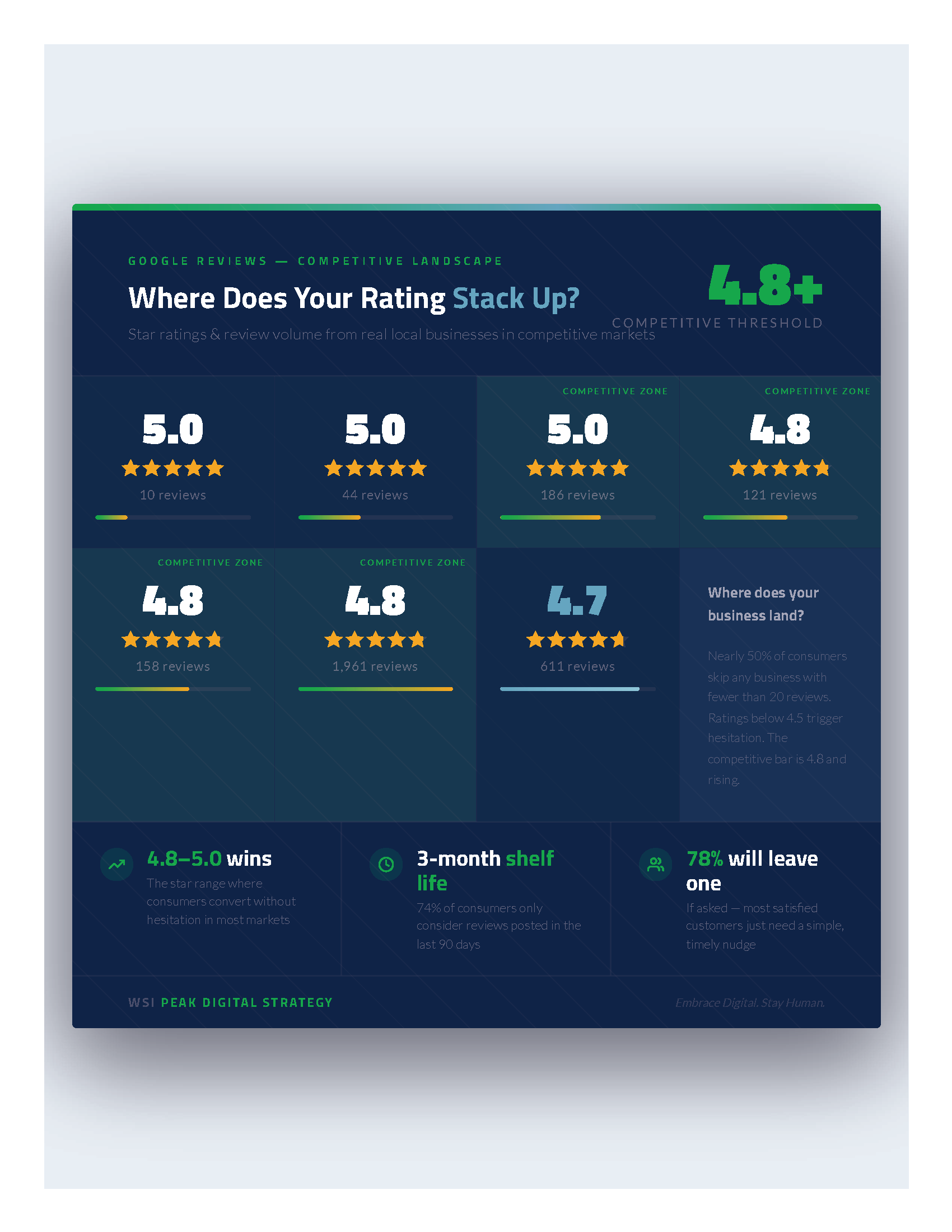
Your Google reviews are now your AI search résumé. Learn why ratings matter more than ever — and how to build a strategy that gets you found and chosen.
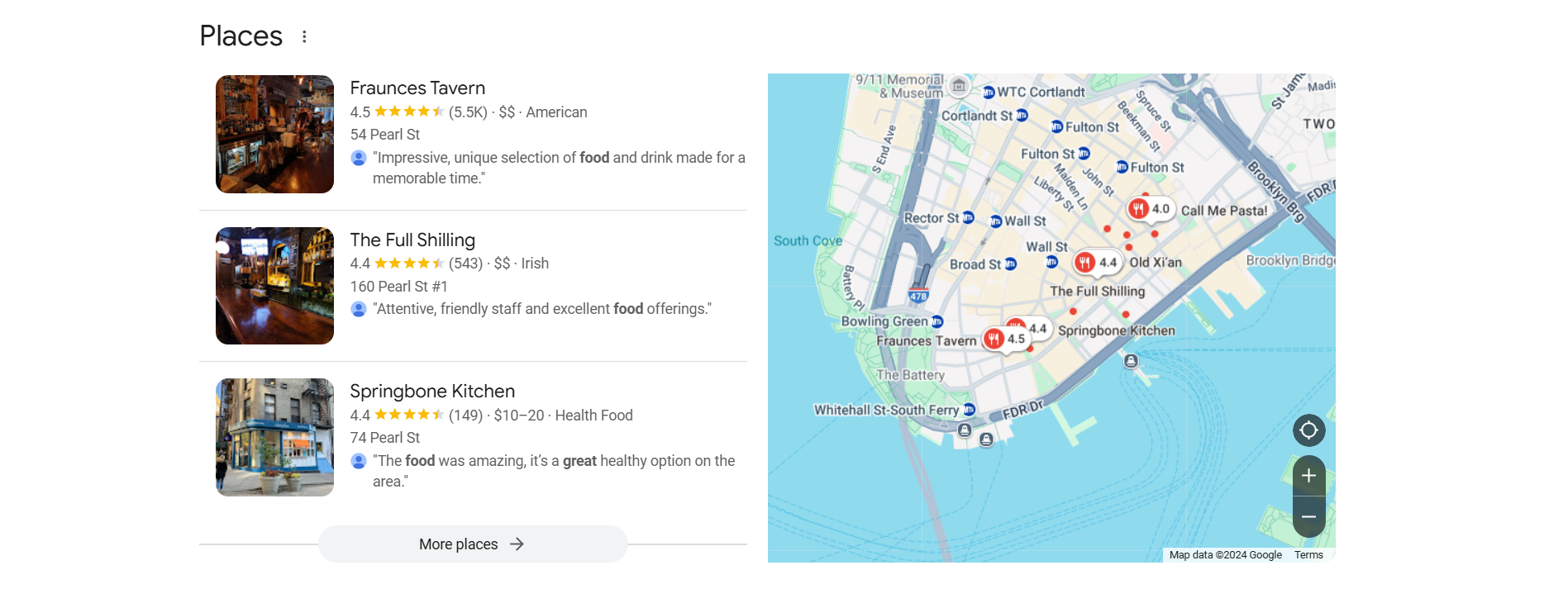
Learn advanced strategies to enhance your Google Business Profile for local search visibility. Discover tips on keyword integration, reviews, GBP posts, and competing with larger franchises.
Discover effective strategies for leveraging AI in your business. Learn how to engage stakeholders, address concerns, and implement AI successfully for growth.
WSI COLORADO SPRINGS
Mailing Address:
13395 Voyager Pkwy, Ste 130-113
Colorado Springs, CO
80921
Phone:
719-445-9962
Email:
[email protected]
SOCIAL
© 2026 Peak Digital Strategy - WSI Colorado. All rights reserved. WSI IC and WSI IM are registered trademarks of RAM. Privacy Policy | AI Policy | Cookie Policy | Accessibility Statement
Each WSI Franchise is an independently owned and operated business.