- HOME
- ABOUT US
- SERVICES
- CUSTOMER STORIES
- OUR EXPERTS
- CONTACT US
- EXPERT TIPS


Making a difference in our clients’ lives
We positively impact the lives of our clients beyond their KPI reports.

Blog Layout
How important are online reviews?

Dave Gustafson
Digital Marketing Consultant
March 11, 2026
Your Reviews Are Now Your Resume in the Age of AI Search
Why building a proactive review strategy is no longer optional — and what you can do about it right now.
Not long ago, getting a handful of Google reviews felt like a nice-to-have. You knew they mattered, but the phone was ringing and the job board was full. Reviews could wait.
That era is over.
Search behavior is shifting fast. Consumers now turn to AI tools — ChatGPT, Google’s AI Overviews, Gemini, and others — to find and vet local businesses before they ever click a link. And what feeds those AI recommendations? Your reputation. Your reviews. The digital trail you either chose to build or chose to ignore.
If you serve customers in Colorado Springs, Monument, or anywhere in the region, this article is for you. Let’s break down what’s changed, why it matters more than ever, and what a smart, intentional review strategy looks like in 2026.
The Way People Find Businesses Has Fundamentally Changed
For most of the past decade, “showing up on Google” meant ranking in search results and collecting Google reviews. That model still matters — but it’s no longer the whole picture.
Here’s what the data tells us right now:
- 45% of consumers now use ChatGPT or other AI tools to find local businesses — up from just 6% the previous year. That is not a trend. That is a sea change.
- The average consumer consults 6 different sources before making a decision. Reviews on one platform are no longer enough.
- 90% of consumers say they’ve made a purchase after reading a positive review — but 66% still go on to do additional research before committing.
- 74% of consumers only consider reviews written in the last 3 months. Your reviews from 2022 are doing less work than you think.
- Nearly 50% of consumers say they won’t consider a business with fewer than 20 reviews.
The takeaway: your reputation is no longer just a star rating on Google. It’s a distributed, multi-platform signal that AI systems are actively reading to decide whether or not to recommend you.
How AI Tools Actually Use Your Reviews
This is the part most businesses don’t understand yet, and it’s where things get really important.
When someone asks ChatGPT to recommend a roofer, a plumber, or a family attorney in your area, ChatGPT doesn’t have direct access to your Google reviews. It synthesizes information from across the web — Yelp, the BBB, industry-specific directories, Reddit, and other sites where your business has a presence (or doesn’t). Google’s AI tools, like Gemini and AI Overviews, lean more heavily on Google’s own data, but they too are pulling from authoritative third-party sources.
Think of AI as a research assistant that reads everything written about your business online and draws a conclusion about whether you’re trustworthy. The more consistent, positive, and diverse that body of evidence is, the more likely you are to be recommended.
Where AI looks for information about your business:
- Google Business Profile and Google reviews
- Yelp and other general review platforms
- Industry-specific directories (e.g., Avvo or Super Lawyers for attorneys, Angi or HomeAdvisor for contractors)
- The Better Business Bureau
- Reddit threads and community forums
- Your own website content
A critically important nuance: AI-generated local packs — the new-format business listings appearing in AI-powered search results — don’t always follow the same ranking rules as traditional Google Maps results. Businesses with fewer total reviews are sometimes surfacing in AI packs over those with more, meaning the race is still very much winnable if you build consistently and strategically.
There’s also a two-step behavior worth noting: many consumers use AI to generate a shortlist, then jump to Google to validate. So even if your AI discovery happens invisibly, that traffic often shows up as a Google brand search. You may be getting more AI-driven attention than your analytics suggest.
Reviews Are Not Just a Marketing Tactic — They’re a Business Strategy
One of the most common mistakes businesses make is treating reviews as a marketing checkbox. Get a few, put them on the website, move on. That thinking is costing businesses real money.
Building a strong review profile requires:
- A consistent process for asking every customer — not just the ones you think will say something nice
- Ongoing velocity, not just a one-time push. Google rewards businesses that get reviews consistently, not in bursts.
- Genuine responses to every review, positive or negative. 81% of consumers expect a business to respond within a week.
- Diversification across platforms relevant to your industry
- Attention to recency — reviews older than three months carry diminishing weight with consumers
Reviews are also a feedback engine. Mining them — especially using AI tools — gives you real insight into what customers value, what frustrates them, and how you compare to competitors. That intelligence is worth as much as the star rating itself.
What a Winning Review Strategy Actually Looks Like
The good news: 78% of consumers say they would leave a review if asked. The barrier isn’t willingness — it’s the absence of a system.
1. Know Your Competitive Baseline
Before you can compete, you need to know what competition looks like in your market. That means identifying how many reviews your top local competitors are getting per month, what their average star ratings are, and when their most recent reviews were posted. Your goal isn’t an arbitrary number — it’s to outpace the people you’re actually competing against.
2. Build the Process Into Your Operations
The most successful review programs are not marketing campaigns — they’re operational habits. For home services businesses, that means technicians asking at the completion of each job. For professional services, it means a follow-up message within 24–48 hours. Asking in the moment, when the experience is fresh, consistently produces the best results.
One effective practice: make the review link as easy to access as possible. Google allows you to generate a direct review link from your Business Profile dashboard. You can also create a QR code — practical for technicians, job site visits, or printed materials — that takes customers directly to your review page with one scan.
3. Ask the Right Way
A good review request is personal, timely, and specific. Use the customer’s name. Reference the specific job or service. Make it easy with a direct link. Ask them to share their honest experience — not to give you five stars. That distinction matters both ethically and practically, since review platforms have become increasingly good at detecting and removing manipulated feedback.
What to avoid:
- Offering gifts, discounts, or incentives to customers in exchange for reviews (this violates Google’s guidelines and FTC rules)
- Review gating — filtering to only ask happy customers, which is also a guideline violation
- Asking for reviews in bulk at one time, which can trigger spam filters
- Scripting specific keywords into review requests
Note: While you cannot incentivize customers to leave reviews, you can incentivize your own employees for their role in the ask. A team-based program that recognizes staff for proactively requesting reviews — without tying the reward to whether the review is positive — can be a powerful culture builder.
4. Diversify Your Review Presence
Google is still the dominant platform, but AI tools feed from a wider ecosystem. The right diversification strategy depends on your industry.
Start by Googling your own business name with the word “reviews” appended. Whatever shows up on that first page is exactly where you need a presence. Yelp, BBB, and industry directories are common for most categories. For legal and professional services, platforms like Avvo and Justia are critical. For home services, Angi and similar contractor platforms carry weight.
Consider also creating a dedicated reviews page on your own website — a page that aggregates your best reviews across platforms, tells your story, and gives you a ranking asset you control. This page can compete directly for branded search traffic and presents a consolidated picture of your reputation.
5. Respond to Every Review
This is one of the most overlooked elements of a review strategy. Responding to reviews — quickly, professionally, and authentically — signals to both consumers and search engines that your business is engaged and accountable. For negative reviews, a measured, solution-oriented response often matters more to prospective customers than the original complaint.
6. Make Your Reviews Visible with Schema Markup
If your website displays reviews or aggregate ratings, adding review schema markup is a smart technical step that helps search engines read and surface that data. When implemented correctly, this can result in star ratings appearing directly in Google search results — a rich snippet that visually stands out and increases click-through rates. Your web developer or digital marketing partner should be able to implement this alongside any site updates.
The Star Rating Threshold You Need to Know
In competitive markets, a 4.0-star rating is no longer competitive. Research consistently shows that consumers are most likely to choose businesses rated between 4.8 and 5.0 stars. Anything below a 4.5 creates hesitation. Anything below a 4.0 is often disqualifying.
This isn’t about being perfect. It’s about the math of consistent quality and consistent follow-through on asking. Every satisfied customer who doesn’t leave a review is a missed opportunity to raise your average and outpace the competition.
A Note on Trust in the Age of AI
One nuance worth acknowledging: consumer trust in AI-generated recommendations is still fragile. Nearly as many people who say they trust AI recommendations also express skepticism. This means that even when AI surfaces your business, consumers will often cross-reference what they find — on Google, on Yelp, on Reddit, or by talking to a neighbor.
This is actually good news for small businesses. Trust is built across multiple touchpoints — not just algorithmic visibility. A business with authentic reviews, a responsive presence, an active community reputation, and a professional online profile will consistently outperform a competitor who simply has more reviews and less substance.
Ready to Build a Review Strategy That Actually Works?
Most businesses know reviews matter. Few have a real system for building them intentionally and sustainably. If you’re tired of leaving this on the to-do list — or if you’re looking at your competitor’s 200+ five-star profile and wondering how they got there — let’s talk.
At WSI Peak Digital Strategy, we help Colorado Springs-area businesses build review programs that are consistent, compliant, and connected to their broader digital presence. We look at your current review profile, your competitive landscape, and your existing customer touchpoints — then help you build a process you can actually execute.
Schedule a complimentary 1:1 strategy call with Dave Gustafson and walk away with a clear picture of where you stand and what to do next.
Your reputation is already being read by AI. Let’s make sure it’s saying the right things.
Dave Gustafson — WSI Peak Digital Strategy, Inc.
Embrace Digital. Stay Human.
WSI Peak Digital Strategy helps small-to-medium businesses in Colorado Springs and beyond grow through SEO, Google Ads, marketing automation, and AI-forward digital strategy. We build systems, not just campaigns.
The Best Digital Marketing Insight and Advice
The WSI Digital Marketing Blog is your go-to-place to get tips, tricks and best practices on all things digital marketing related. Check out our latest posts.
Subscribe Blog
*You may unsubscribe from digital communications at anytime using the link provided in WSI emails.
For information on our privacy practices and commitment to protecting your privacy, check out our Privacy Policy and Cookie Policy.
For information on our privacy practices and commitment to protecting your privacy, check out our Privacy Policy and Cookie Policy.
Don't stop the learning now!
Here are some other blog posts you may be interested in.
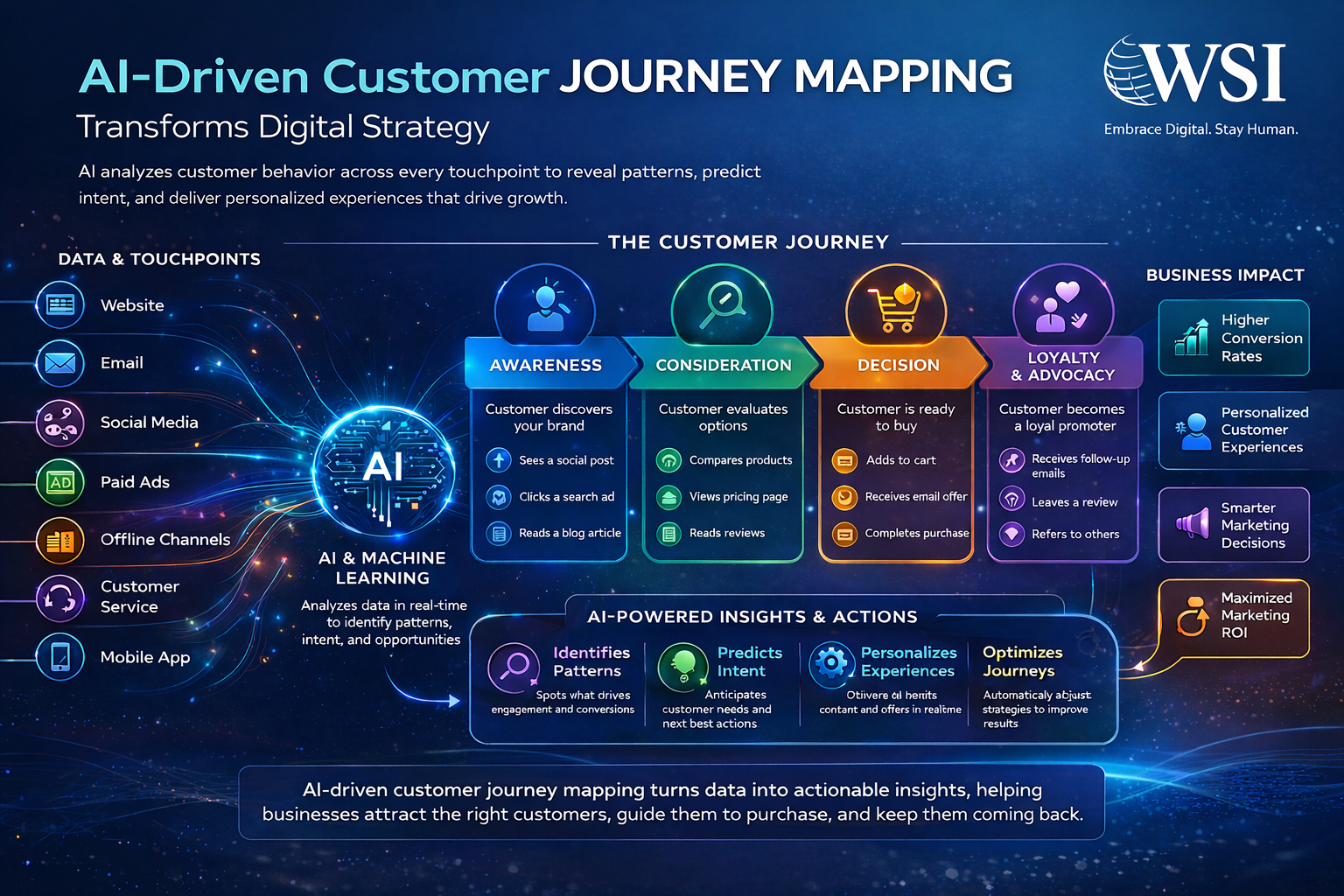
Learn how AI-driven customer journey mapping revolutionizes digital marketing strategy, improves conversions, and delivers personalized experiences.
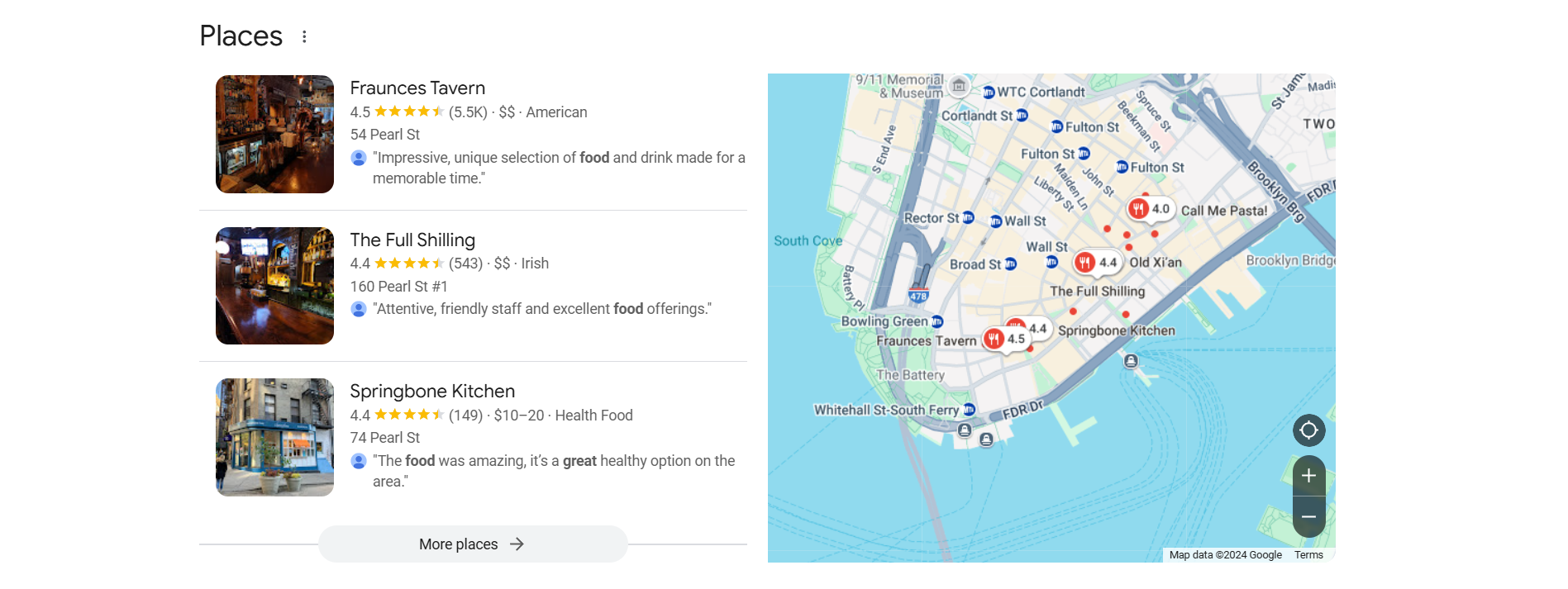
Learn advanced strategies to enhance your Google Business Profile for local search visibility. Discover tips on keyword integration, reviews, GBP posts, and competing with larger franchises.

Discover effective strategies for leveraging AI in your business. Learn how to engage stakeholders, address concerns, and implement AI successfully for growth.
WSI COLORADO SPRINGS
Mailing Address:
13395 Voyager Pkwy, Ste 130-113
Colorado Springs, CO
80921
Phone:
719-445-9962
Email:
[email protected]
SOCIAL
© 2026 Peak Digital Strategy - WSI Colorado. All rights reserved. WSI IC and WSI IM are registered trademarks of RAM. Privacy Policy | AI Policy | Cookie Policy | Accessibility Statement
Each WSI Franchise is an independently owned and operated business.